 how-to
7 FDA Labeling Errors That Cause Import Detention
Last Updated: October 26, 2026
Quick Summary
Labeling errors cause detention because FDA treats the label as a legal claim about the product, and a wrong label makes goods misbranded and inadmissible. The seven most common labeling errors are missing allergen declarations, unrecognized ingredient names, wrong Nutrition Facts format, unsupported health claims, wrong net quantity, missing firm name and address, and foreign-language-only labeling.
- Detention is a hold you can resolve; refusal is a verdict that forces export or destruction.
- Respond to a detention notice within the stated window or the shipment defaults toward refusal.
- Cite the detention and entry numbers on every document you submit to FDA.
- Pair corrected label artwork with a cover letter naming the cited violation and the fix.
- Run a pre-shipment label review on every new label and every label change.
Table of Contents
- Why FDA Labeling Errors Cause Detention
- FDA Labeling Requirements Every Imported Product Must Meet
- 7 Labeling Errors That Lead to Detention and Refused Entry
- Detention, Refusal, and FDA Import Alert: How They Differ
- What an FDA Detention Notice Tells You
- FDA Detained Shipment Correction: A Step-by-Step Response Timeline
- Pre-Shipment Label Review: Preventing Detention Before It Starts
- Get Your Labels Reviewed Before Your Next Shipment
- Frequently Asked Questions
Why FDA Labeling Errors Cause Detention
A label is the only part of your shipment an FDA investigator can read without opening the box. When that label is wrong, the shipment stops. A foreign food or supplement manufacturer may ship a compliant product with a noncompliant label, and the product can sit in a warehouse for weeks. The reason is simple.
Below, we break down the seven labeling errors that trigger detention most often, how a detention differs from a refusal, and the exact steps to take when a notice arrives.
FDA Labeling Requirements Every Imported Product Must Meet
FDA labeling requirements are the set of mandatory statements a product label must carry before the goods can enter the country. For food and supplements, these include the statement of identity, net quantity, ingredient list, allergen declaration, nutrition information, and the name and place of business of the manufacturer or distributor. FDA food labeling guidance sets out the format rules for each element.
The core principle: every required element must be present, accurate, and in the correct format. A missing allergen statement is a labeling error. So is an ingredient listed under a name FDA does not recognize.
Required Label Elements and Ingredient Declarations
- Statement of identity in the correct format
- Net quantity in metric and U.S. customary units
- Ingredients listed by common name, in descending order by weight
- Allergen declaration in plain language
- Nutrition Facts panel where required
- Name and place of business of the responsible firm
An ingredient declaration must list every ingredient. "Natural flavors" is acceptable in some contexts; an unnamed "spice blend" is not. A common mistake is copying a label from another market without checking U.S. naming conventions.
Nutrition Facts and Allergen Labeling
The Nutrition Facts panel has strict format rules. Serving size, calories, and nutrient values must follow the required layout. Allergen labeling is stricter still: the nine major allergens must be declared clearly. FDA allergen labeling guidance explains the acceptable formats.
An unclear allergen statement is one of the fastest routes to detention. FDA will not release a food product whose allergen risks cannot be read from the label.
7 Labeling Errors That Lead to Detention and Refused Entry
Labeling errors cause detention because each one makes the product misbranded or adulterated in FDA's view. The seven we see most often:
- Missing or incomplete allergen declaration
- Ingredient names that do not match FDA-recognized terms
- Nutrition Facts panel in the wrong format or missing
- False or unsupported health claims
- Wrong net quantity or missing metric units
- Missing name and place of business
- Foreign-language-only labeling with no English
Each of these is a preventable error. None requires the product itself to be defective.
Misbranding and Inaccurate Product Information
Misbranding is the legal term for a label that is false or misleading, or that omits a required element. A product can be perfectly safe and still be misbranded.
Inaccurate information is the most serious form.
If your food or supplement labels need a compliance check, our FDA food and supplement label review service compares your label against the current rules before you ship.
Detention, Refusal, and FDA Import Alert: How They Differ
These three terms get used interchangeably in shipping conversations. They are not the same, and the difference decides what you can still do with the shipment, who pays for it, and how long the problem follows your firm.
Detention is a hold, not a verdict. Under the Federal Food, Drug, and Cosmetic Act, FDA can detain an imported article at the port of entry while it reviews whether the goods are admissible.
Refusal is the verdict. If FDA determines the article is adulterated or misbranded and the issue is not resolved within the response window, the agency refuses admission.
An FDA Import Alert is a published list, not a single-shipment action. Once your firm or product appears on an alert, future shipments can be detained without physical examination, meaning FDA does not need to look at the label to hold the goods (the FDA).
The escalation runs in that order: detention you do not resolve becomes refusal; a pattern of refusals or a documented violation can put your firm on an Import Alert.
| Status | What it means | Who controls the outcome | Typical path out |
|---|---|---|---|
| Detention | Shipment held for review | Importer, by submitting evidence | Correct the label issue and respond within the window |
| Refusal | Product ruled inadmissible | FDA, after the response window closes | Export or destroy the goods |
| Import Alert | Firm/product flagged for future shipments | Importer, by proving corrective action | Petition for removal with documented fixes |
For a deeper look at who carries the cost when a shipment is held, read our guide on FDA import detention liability.
What an FDA Detention Notice Tells You
An FDA detention notice is the formal document FDA issues when it holds your shipment. It states the reason for detention and the section of the law involved.
The notice gives you a set response window. Miss it and the shipment moves toward refusal. The notice also tells you what evidence FDA will accept to release the goods.
A common mistake is responding with a general assurance that the product is fine. FDA wants specific supporting evidence tied to the stated violation.
FDA Detained Shipment Correction: A Step-by-Step Response Timeline
FDA detained shipment correction works best when you move fast and answer the stated reason directly. The operational timeline below is the part that actually decides whether the goods are released or refused.
- Day 1-2: Read the notice and identify the exact violation. The detention notice cites the specific section of the law and the specific label element at issue. Match the citation to one element, allergen declaration, net quantity, ingredient naming, Nutrition Facts format, or the responsible firm's name and address. Do not respond to the whole label; respond to the cited element.
- Day 2-3: Assemble evidence tied to that element. FDA wants proof, not assurance. The evidence set usually includes: corrected label artwork showing the fix, the ingredient specification or supplier documentation that supports any changed declaration, a written explanation of what was wrong and what changed, and, where relevant, a corrective action plan covering future shipments.
- Day 3-5: Submit the response through the proper channel, referencing the detention number. Every detention carries an entry number and a detention number. A response that does not reference them slows review. Submit through the channel named on the notice, and keep a copy of everything you send.
- Day 5-10: Follow up and answer additional requests. FDA may come back with a second question. Treat it as a request for a specific document, not a reopening of the whole case. A second request is normal; a second request caused by a vague first response is the expensive kind.
- After release: fix the root cause. Update the label template, the review checklist, and the version control so the next shipment does not repeat the error. A detention that recurs on the same element is how firms drift toward an Import Alert.
Document checklist for a detention response:
- Copy of the detention notice with the cited section highlighted
- Corrected label artwork (before/after)
- Ingredient specification or supplier documentation for any changed declaration
- Written explanation tying the fix to the cited violation
- Corrective action plan for future shipments
- Detention and entry numbers on every document submitted
If a medical device, cosmetic, or drug label is the problem, our specialized reviews can correct it before the next shipment: FDA medical device label review, FDA cosmetics label review, and FDA drug labeling review.
Pre-Shipment Label Review: Preventing Detention Before It Starts
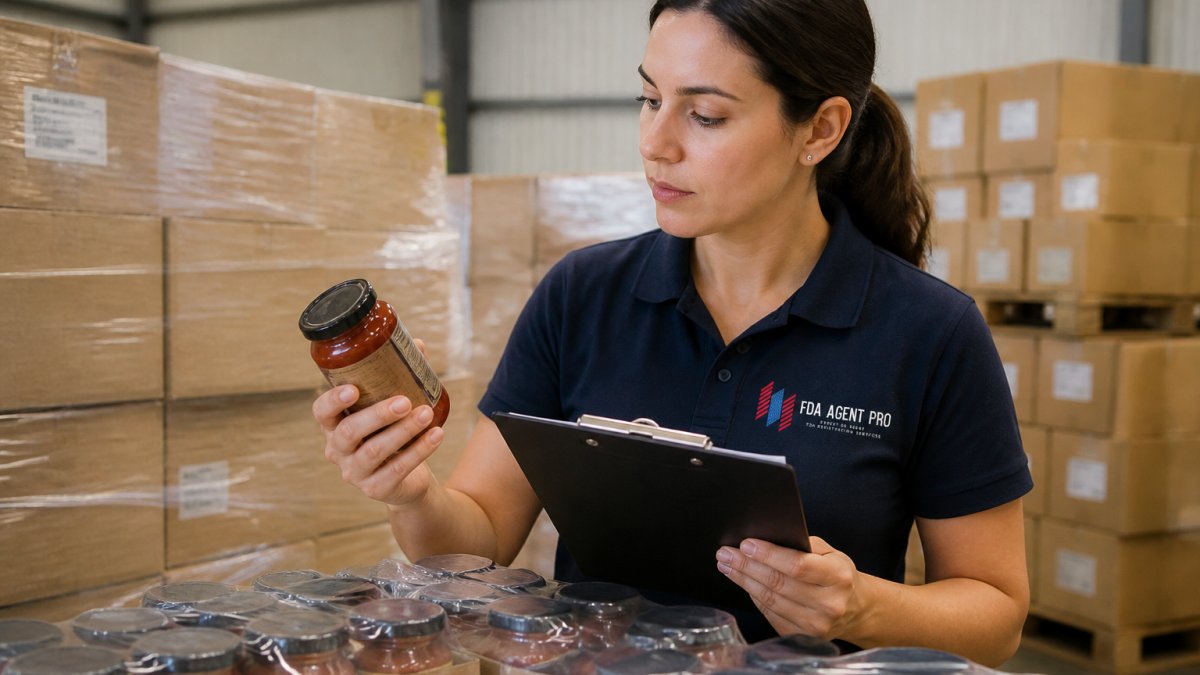
The cheapest detention is the one you never have. A pre-shipment label review catches the seven errors above before the goods leave the factory. Run this checklist on every new label and every label change:
- Statement of identity present and correctly formatted
- Net quantity in both metric and U.S. customary units
- Full ingredient list in descending order by weight
- Allergen declaration clear and complete
- Nutrition Facts panel in the required format
- Name and place of business of the responsible firm
- All required text in English
- No unsupported health or structure/function claims
A label review takes far less time than a detention. At FDA Agent Pro, we manage labeling reviews alongside facility registration and product listing, so the compliance picture stays consistent from one shipment to the next. Over 1,000 companies rely on us for this work.
Get Your Labels Reviewed Before Your Next Shipment
Detention is a paperwork problem with a real cost: storage, delay, and the risk of refusal. The fix is to catch labeling errors before the container ships, not after the notice arrives. FDA Agent Pro handles food, supplement, medical device, cosmetic, and drug label reviews, plus facility registration and biennial renewals, so foreign companies can enter the U.S. market without avoidable delays.
Get started with FDA Agent Pro and ship your next order with labels that pass review the first time.
Frequently Asked Questions
Why can an FDA labeling error cause an import detention?
FDA reviews labels during border inspection, and a label that misses required elements or makes inaccurate claims makes the product misbranded under the Federal Food, Drug, and Cosmetic Act. A misbranded product is not admissible, so FDA can detain the shipment at the port. Detention is not a fine; it holds your goods until you either correct the labeling problem or FDA refuses entry. Common triggers include missing allergen declarations, wrong Nutrition Facts formats, and unsubstantiated product claims.
What is the difference between an FDA import detention and refusal?
Detention is a hold. FDA notifies the importer through a detention notice, and you have a window to submit evidence or a correction plan. Refusal, or refused entry, is the final decision that the product cannot enter, and the shipment must be exported or destroyed. An FDA Import Alert is broader: it flags a company or product type for enhanced scrutiny, so future shipments face automatic detention until the firm is removed from the alert. Each stage carries different response options.
Can an importer correct labeling errors while a shipment is detained?
Yes, in many cases. After an FDA detention notice, importers can submit a correction plan, relabel the product at a compliant facility, or provide supporting evidence that the label meets FDA labeling requirements. FDA reviews the response and decides whether to release, continue detention, or refuse. Speed matters: respond within the stated deadline with documentation rather than waiting. A clear corrective action plan and revised label artwork strengthen the submission.
How can importers prevent FDA labeling errors before shipping?
Run a pre-shipment label review against FDA labeling requirements for your product category. Check required label elements, ingredient declaration order, allergen statements, and Nutrition Facts format, and confirm that any product claims are substantiated. Keep a document checklist with label artwork versions and supplier sign-offs. A review before the shipment leaves the foreign facility costs far less than a detained shipment, and it reduces the risk of repeat issues that can escalate toward an Import Alert.